

Goldlux Galleria Blog
All About Gold: Chemical Symbol, Properties, Uses, and Alloys

All About Gold: Chemical Symbol, Properties, Uses, and Alloys
Goldlux Galleria
Gold is one of the most beautiful elements in nature, admired for its metallic luster and unique yellow hue. In thin layers, gold can even appear black, red, or purple. This precious element is measured in ounces and is widely used in coin minting, jewelry, dentistry, and metal plating. Knowing the characteristics of gold is essential, given its value and versatility. Here, Goldlux Galleria provides a comprehensive overview of gold’s unique features, from its chemical symbol to its practical applications and alloys.
Gold’s Chemical Symbol and Meaning
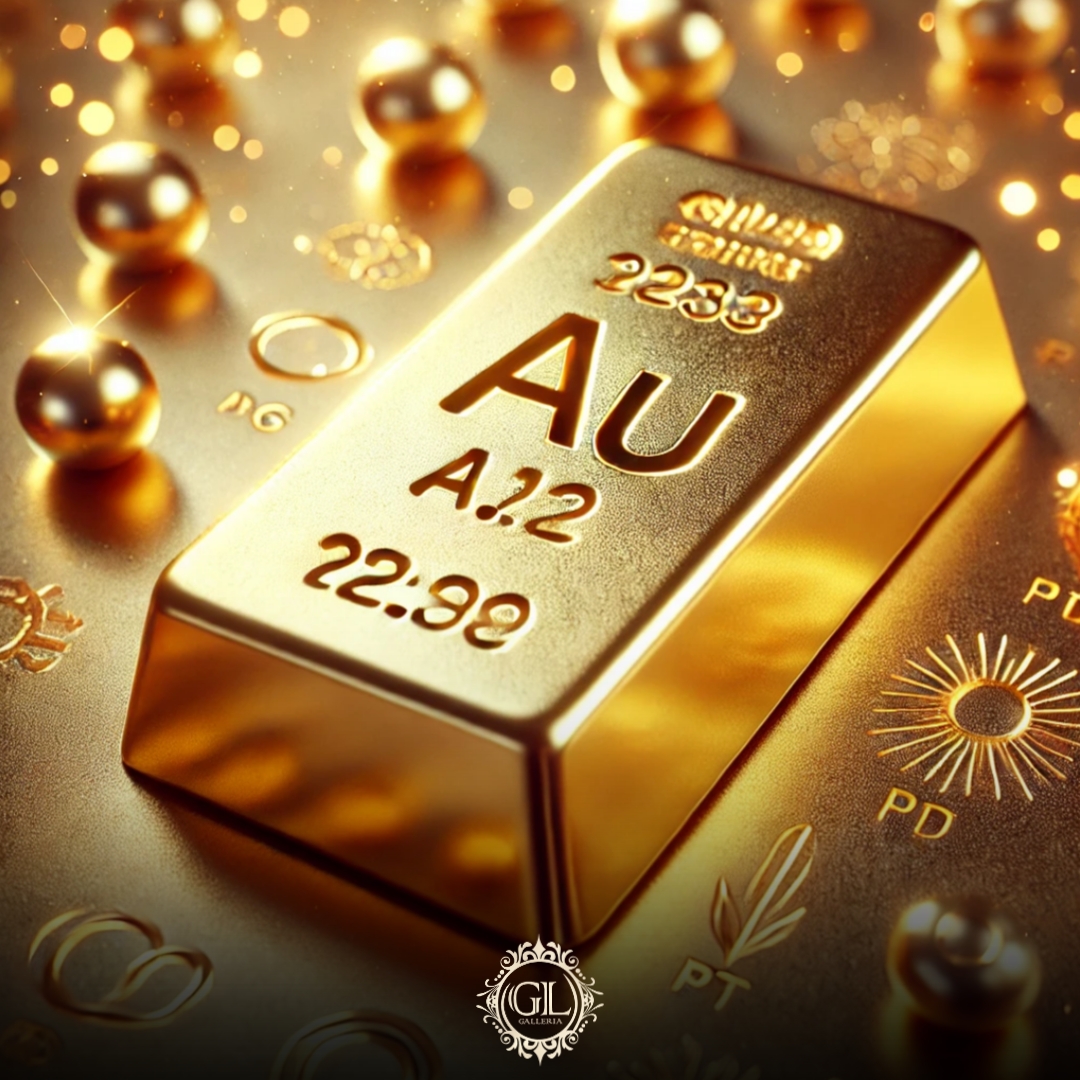
The chemical symbol for gold is Au, derived from its Latin name, Aurum, meaning “shining dawn.” Gold’s value is due to its rarity, easy refining process, resistance to rust and corrosion, distinctive color, and low reactivity with other elements. Gold can be drawn into extremely thin wires, making it ideal for intricate jewelry designs.
1. Chemical Properties of Gold
Gold, with atomic number 79, belongs to Group 11 of the periodic table and is classified as a transition metal. These metals, with atomic numbers 21-30, 39-48, 57-80, and 89-112, all have increasing numbers of electrons in their outer shells. Gold is also a pure element, naturally occurring with a single stable isotope—meaning every atom of gold has the same number of protons and neutrons.
2. Gold’s Exceptional Resistance to Corrosion
Gold is highly valued in industry and medicine for its outstanding resistance to corrosion and slow reactivity. It does not tarnish or react with air, water, or harsh environmental conditions. This makes gold ideal for advanced electronic control systems, where its components remain conductive and durable over time. Gold’s resistance to acids is also crucial in dentistry, as gold dental fillings withstand acids found in the mouth and food.
3. High Density
Gold is renowned for its high density—at 20°C, it weighs 19.3 grams per cubic centimeter, close to plutonium’s 19.74 g/cm³. This density places gold among the heaviest metals.
4. Low Hardness and Melting Point
With a melting point of 1,063°C and low hardness, gold is heavy but exceptionally malleable and soft. These traits allow gold to be rolled into sheets as thin as 0.001 mm, perfect for gold leaf. One ounce of gold can be stretched into a wire 105 kilometers long. Gold’s relatively low melting point (compared to iron’s 1,535°C) makes it easy to melt and shape.
5. Gold’s Stability and Alloying
Gold is stable in most acids, except for aqua regia and alkaline cyanide or mercury solutions. Nitric acid, which dissolves silver and base metals, does not affect gold—a fact used in acid testing for gold authenticity. Gold is commonly alloyed with copper, silver, nickel, and palladium. The purity of gold in alloys is measured in karats (24 being pure gold) or per thousand. For instance, 18K gold contains 75% pure gold.
6. Gold’s Distinctive Color
Unlike most metals, which are gray or silver-white, gold is a slightly reddish yellow. This unique color is due to relativistic effects on its electron orbitals—a trait also seen in cesium. Gold alloys come in various colors: 18K rose gold with copper, white gold with palladium or nickel, green gold with silver, and blue gold with iron. Fourteen-karat gold-copper alloys resemble some types of bronze and are used in badge manufacturing. Colloidal gold can appear red or blue depending on particle size, and other unusual gold colors can be made by adding manganese or indium.
Applications of Gold
1. Jewelry
Gold’s rarity, physical properties, and dazzling appearance make it the world’s most valued precious metal—most famously used in jewelry. About 2,500 tons of gold are mined annually, with more than 80% (2,000 tons) going to create watches, chains, rings, bracelets, and other jewelry. This industry represents the largest segment of gold processing.
2. Technology
Gold’s superb electrical conductivity is vital for the electronics industry. About 35% of gold demand is in finance and investment, while the rest supports technology and industrial uses. Gold is also common in dentistry. Innovative uses include gold salts at the nanoscale for biomedical and medical purposes, such as treating rheumatic diseases.
3. Investment
Investors are among the world’s largest gold buyers, engaging in two main ways:
Physical Investment: Buying gold bars and coins directly—ideal for those wanting tangible assets.
Derivatives and Stocks: Others invest through gold futures and financial instruments, allowing participation in the gold market without physically owning gold. Some also invest in shares of gold industry companies for exposure to sector profits.
4. Medicine
Historically, gold has been used in medicine and dentistry. In ancient times and the Middle Ages, gold was valued for promoting health. Today, gold is used in various medical applications, including some pharmaceuticals. In dentistry, gold is trusted for fillings, crowns, and even full tooth replacements because it bonds well with other dental alloys and stands up to daily use.
5. Cuisine and Food
Gold is a luxury garnish for desserts, powders, and drinks on high-end restaurant menus. There is no health risk in consuming edible gold—human bodies do not absorb or react to its chemical structure, and it passes harmlessly through the digestive system. Some companies even profit from extracting gold from restaurant and hotel wastewater, as well as from gold workshops.
Gold: A Rare but Essential Metal
Gold is a rare mineral resource in the earth’s crust. Its rarity, brilliance, and enduring appeal have made it the world’s most important precious metal throughout history. Thanks to its unique properties, gold continues to play a vital role across industries—from jewelry and financial investments to electronics and medicine.